join the success
Don’t just take our word for it
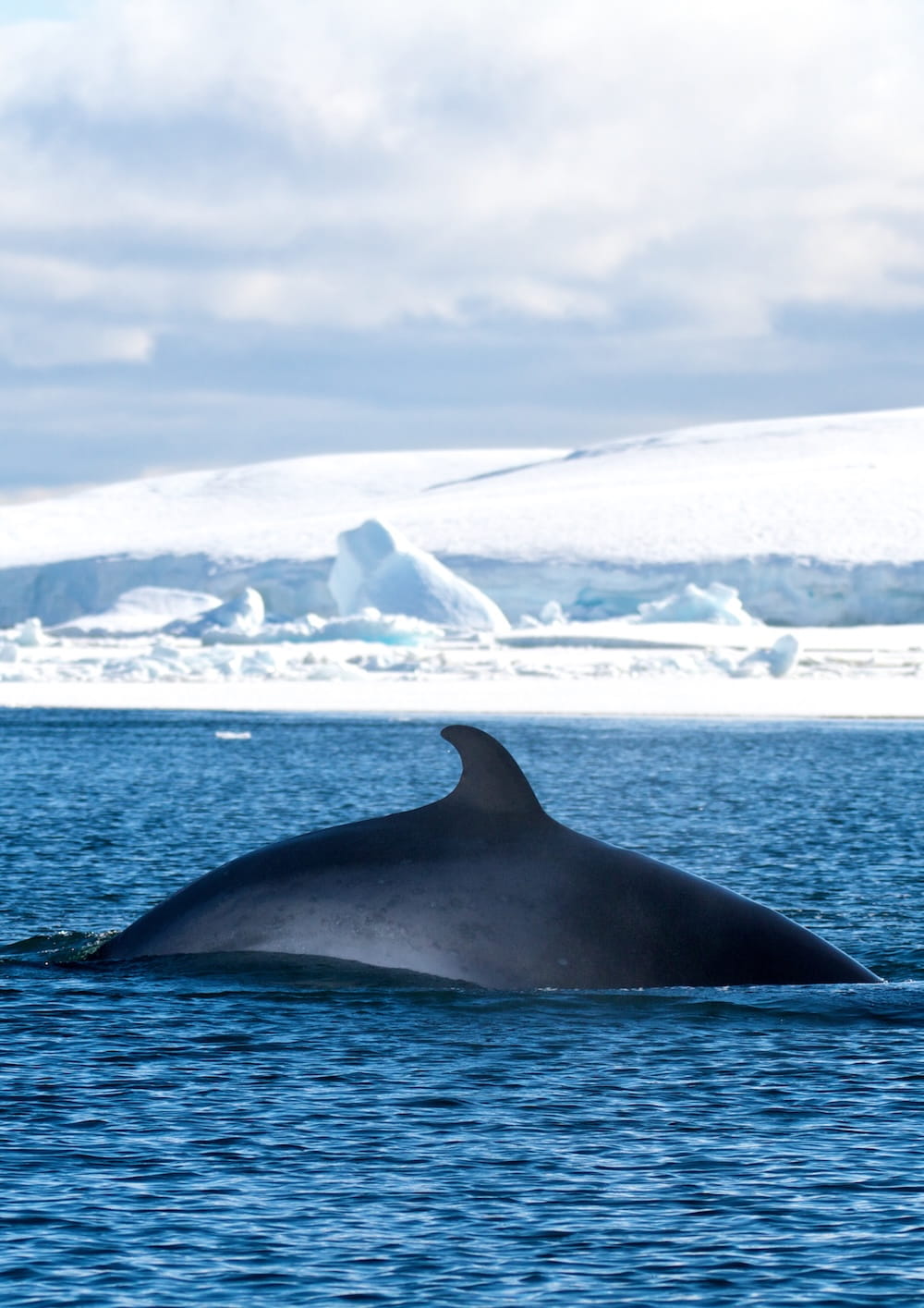
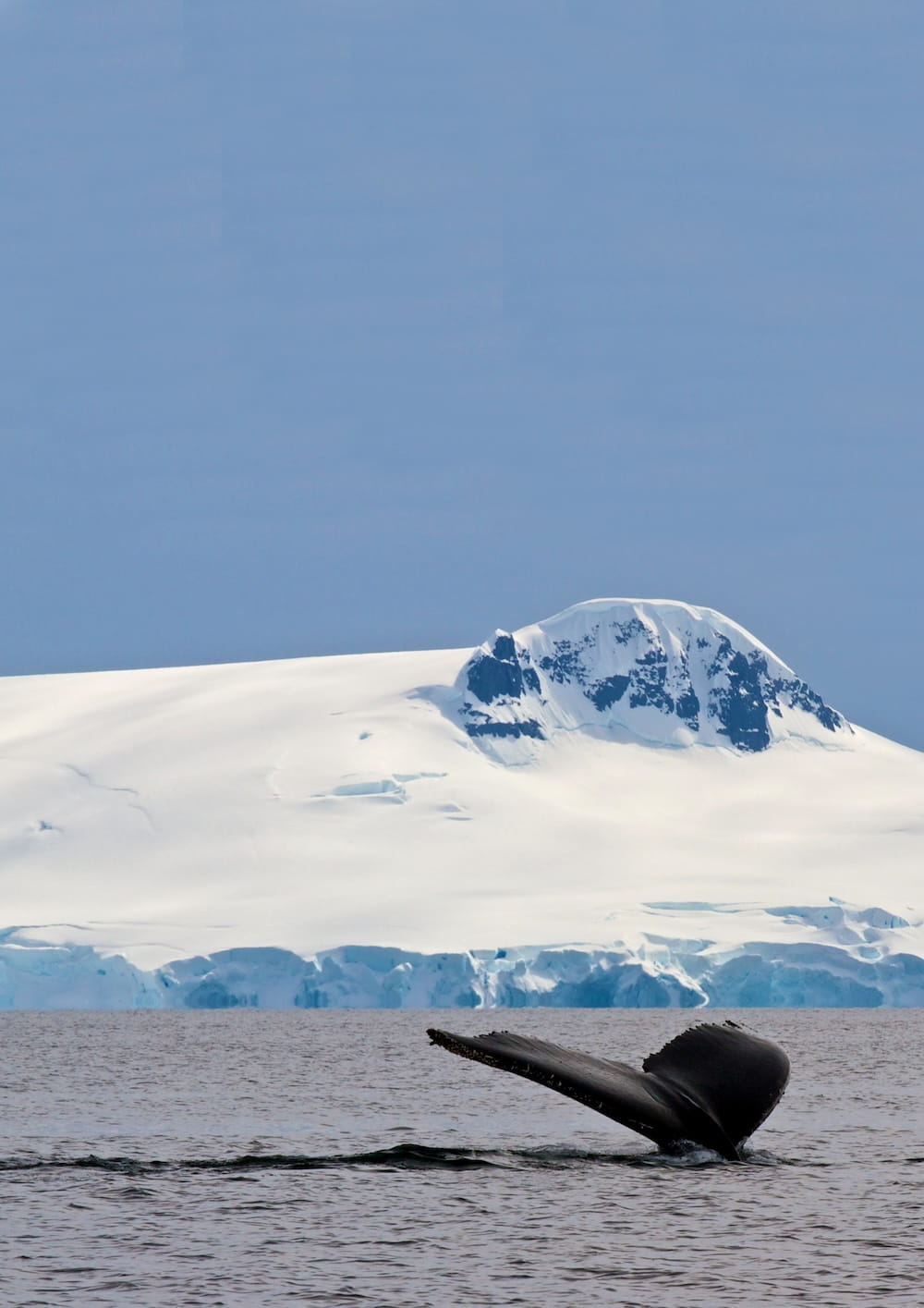
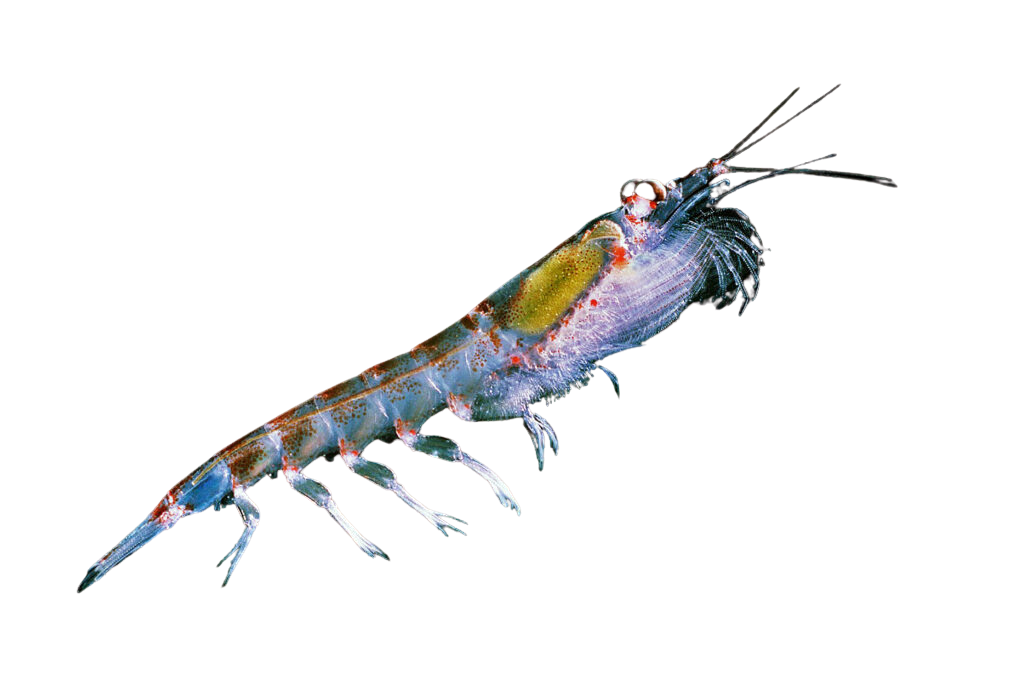
Krill is the keystone species of the ecosystem in Antarctica. The majority of Antarctic species are reliant on krill as their primary food source or krilI is the the food source of their prey. From the great whales down to the penguins, seals and seabirds, all rely on an abundance of krill to survive.
Currently the quota set by CCMLAR (Convention for the Conservation of Antarctic Marine Living Resources) is 620,000 tons which is said to represent 1% of the total biomass of krill. However the fishing of krill is in concentrated areas, meaning that the likelihood of ecological collapse in those areas is far more likely.
After the near extinction of several large whale species in the 19th and 20th centuries, conservation efforts in the later half of the 20th century and 21st century have seen whale populations recovering. Though not back to their pre-commercial whaling numbers, this increase in whale populations obviously requires a greater amount of krill for food. Yet what we are seeing is a greater extraction of krill by human commercial enterprises.
There are currently 13 large super-trawlers from Norway, China, Chile, Namibia & South Korea. Whilst in the previous decade Norway has dominated, China has recently added the Fu Yuan Yu 9199, the Fu Xing Hai and the Hua Xiang 9 and to service these the new Hua Xiang 6 refrigerated cargo vessel to take the krill frozen back to China. As terrifying as the new Chinese vessels sound this pales in capacity to the Aker Biomarine fleet who have three large fishing vessels Antarctica Sea, Antarctic Endurance and the Saga Sea supported by their custom built Antarctic Provider refrigerated vessel, that takes the krill catch to Aker’s nearby processing facility in Montevideo, Uruguay.
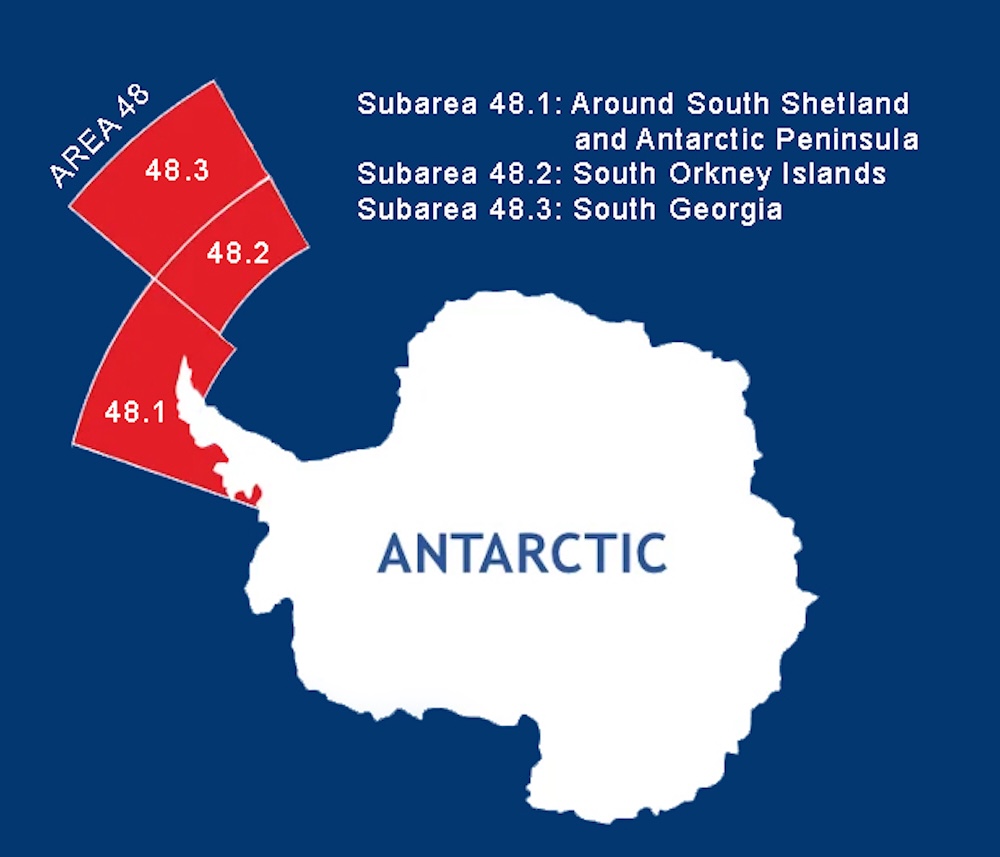
Krill is permitted to be taken from three areas near the Antarctic Peninsula. These areas are all within what is known as Area 48. One of these is around the South Orkney Islands (48.2) which is where we see all of the krill vessels operating in very close proximity to each other and thousands of whales that are also there to feed. Other locations are 48.1 Antarctic Peninsula and 48.3 around South Georgia.
Up until this year, the krill industry was dominated by Aker Biomarine from Norway who took more than 65% of all the krill. However with the new Chinese vessels, Aker’s domination will likely be challenged this year. This is why taking direct action is needed now more than ever, as failing to act and allowing the continuation of this exploitation and destruction will have unimaginable repercussions.
WHY WE ARE GOING
In the icy embrace of Antarctica, an unseen tragedy is unfolding, and only a handful of voices are brave enough to acknowledge its chilling reality. At the heart of this looming disaster lies a tiny yet vital creature: the Antarctic krill. These shrimp-like crustaceans are not just a feast for whales, seals, penguins, and seabirds; they are the linchpin of the entire Antarctic food web, the very essence of life that nourishes the largest animals on our planet. Yet, dark clouds gather over the Southern Ocean as industrial trawlers descend with rapacious greed, stripping the sea bare. They are vacuuming up krill by the hundreds of thousands of tonnes each year, transforming these critical beings into feed for farmed salmon and supplements for human consumption.
Just last season, fleets reached their staggering quota of 620,000 tonnes at record-breaking speed, a shocking harvest that fuels an insatiable appetite for destruction.
Dominated for years by Norway’s AKER Biomarine, the krill fishery has now become a battleground. China, South Korea, Chile, and Namibia have unleashed their fleets, sparking an urgent race against time to strip the ocean of its bounty before it can recover. The stakes are rising, and the cost of this relentless exploitation is catastrophic. Krill do far more than merely feed marine life; they act as a crucial carbon sink, capturing and storing a staggering 12 billion tonnes of carbon annually. With their decline, we not only face ecological collapse but also hasten the breakdown of our climate. As krill vanish, so too will the whales, and much of the Earth’s ability to stabilize its climate will slip through our fingers.
Captain Paul Watson warns of the dire implications: “If the ocean dies, we die,” says Captain Paul Watson. “Krill are the blood of the sea. Without them, the whales, penguins, fish and birds will starve, and the ocean will fall silent.”
WHAT WE ARE GOING TO DO
In early 2026, the Captain Paul Watson Foundation, in a valiant alliance with Sea Shepherd France, will launch OPERATION KRILL WARS, a bold mission to safeguard the Antarctic ecosystem from this relentless industrial assault.We will venture into perilous waters to halt the destruction brought forth by krill trawlers operating in the Southern Ocean.
As the High Seas Treaty comes into play, the world finds itself at a crucial crossroads. This treaty offers a glimmer of hope, but without action to enforce it, it risks being merely an empty promise. That is why the Captain Paul Watson Foundation is stepping up, committed to holding nations accountable and ensuring the protection of Antarctica’s fragile foundation.
Captain Paul Watson adds, “Our purpose is to uphold international conservation law, to act when governments refuse to take action, to challenge the disregard for laws and to establish a legal precedent for intervention for the High Seas Treaty for the protection of biodiversity beyond national jurisdictions.”
We must act swiftly: save the krill, save the whales, and ultimately, save ourselves.
Help Protect Whales
Take Action in Your Community
Industrial fleets are removing vast quantities of krill from the Southern Ocean, the primary food source for whales, seals, penguins, and seabirds. Much of this krill ends up in Omega-3 supplements sold in stores around the world.
You can help change this.
Download our letter and ask your local stores, pharmacies, and restaurants to switch from krill-derived products to sustainable, whale-safe alternatives like algal or plant-based Omega-3s.
Small conversations in local communities can create big change for the oceans.
We have the ships and crew ready, but we need your support.
$35
Fuels one nautical mile of patrol
$250
Provides an hour of satellite communications for real-time evidence gathering

$1000
Funds drone flights to document krill vessels.
$25,000
Sponsors a full day of operations at sea.